Cognitive Biases and Functions
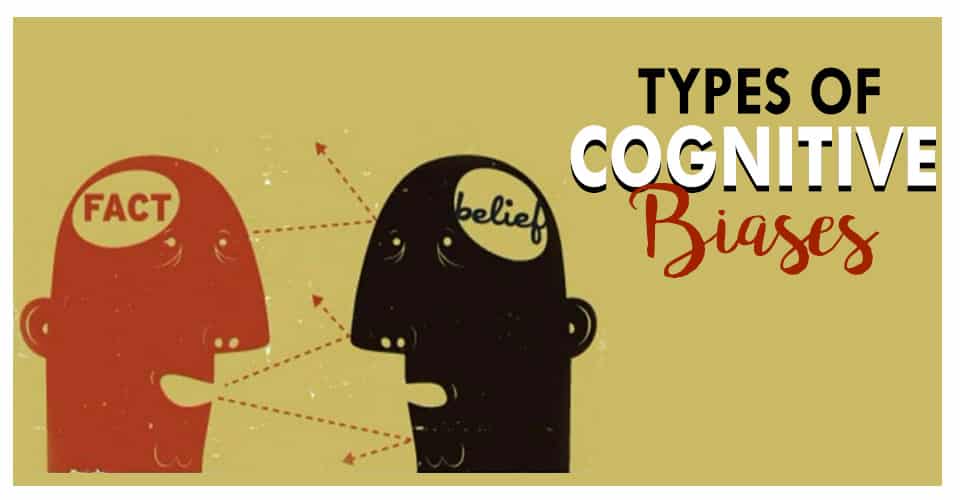
The human brain is an incredibly powerful processing engine. Every single second, it takes in millions of pieces of data....reading the room, analyzing social dynamics, and making rapid fire judgments to help you navigate the world.
But here is the catch: to process all this information so quickly, the brain takes shortcuts. While these mental shortcuts keep us efficient, they also create systematic "glitches" in how we perceive reality. In psychology, we call the processes cognitive functions and the glitches cognitive biases.
If you want to truly understand human behavior...both your own and the people around you...you have to understand how these mental blind spots work. Let's break it down.
What Are Cognitive Functions?
Before we look at the glitches, we need to understand the software. Cognitive functions are the fundamental mental processes that allow us to interact with the world.
Perception: How you take in information through your senses and interpret it.
Attention: Your brain's ability to focus on specific stimuli while filtering out the noise.
Memory: How you encode, store, and retrieve information.
Decision Making & Reasoning: How you weigh options, solve problems, and draw conclusions based on the data you've gathered.
When these functions work perfectly, you make rational, logical choices. But because the brain wants to save energy, it relies on heuristics (rules of thumb). When a heuristic misfires, a bias is born.
4 Common Cognitive Biases (And How They Trick You)
Here are some of the most common psychological traps our minds fall into, complete with everyday examples.
1. Confirmation Bias
This is the brain’s tendency to search for, interpret, and remember information in a way that confirms what you already believe, while completely ignoring evidence that proves you wrong.
The Example: You believe that people who drive red cars are aggressive. Every time a red car cuts you off, your brain says, "Aha! I knew it." But your brain conveniently forgets the dozens of silver and black cars that also cut you off, or the red cars that drove perfectly fine.
2. The Halo Effect
The Halo Effect happens when your overall impression of a person influences how you feel about their specific traits. If you think someone is highly attractive or charismatic, your brain automatically assumes they are also smart, funny, and trustworthy.
The Example: A well-dressed, confident person walks into a job interview. Because they look the part and have great posture, the interviewer unconsciously assumes they are highly competent at the job, even before reviewing their actual qualifications.
3. The Anchoring Bias
Our brains tend to rely far too heavily on the first piece of information we receive (the "anchor") when making decisions.
The Example: You walk into a store and see a jacket marked $500, marked down to $150. You feel like you are getting an incredible deal. If you had just seen the jacket priced at $150 initially, you might have thought it was too expensive. The original $500 price anchored your perception of its value.
4. The Dunning-Kruger Effect
This is a cognitive bias where people with limited knowledge or competence in a specific domain greatly overestimate their own abilities. Conversely, true experts often underestimate themselves because they realize how much they don't know.
The Example: Someone who just read a single article on investing suddenly feels confident enough to give their friends financial advice, believing they have cracked the code to the stock market, while a seasoned economist remains cautious and hesitant to make predictions.
How to Outsmart Your Own Brain
You cannot completely eliminate cognitive biases—they are hardwired into our biology. However, you can mitigate their impact by bringing them into your conscious awareness.
Play Devil’s Advocate: Whenever you feel absolutely certain about something, force yourself to argue the opposite side.
Slow Down: Biases thrive on speed. When making an important decision, step away and give your analytical brain time to catch up with your snap judgments.
Seek Objective Feedback: Ask people who disagree with you for their perspective. It breaks the echo chamber of confirmation bias.
Frequently Asked Questions (FAQs)
Q: Are cognitive biases always a bad thing? A: Not necessarily. From an evolutionary standpoint, biases kept us alive. If you saw a rustling bush in the wild, your brain assumed it was a predator and made you run (a safe bias), rather than stopping to logically analyze the probability of it just being the wind. They are efficient, but not always accurate.
Q: Can you train yourself to have zero biases? A: No. Because your brain processes millions of bits of information per second, it must use shortcuts to function. The goal is not to eliminate them, but to recognize them when making high-stakes decisions.
Q: Is there a difference between a bias and a logical fallacy? A: Yes. A cognitive bias is a flaw in your thinking process or perception (how your brain interprets reality). A logical fallacy is a flaw in your argument or reasoning (how you articulate a point).


Comments
Post a Comment